
An unattended death is a death that is not discovered immediately — a person who died alone and was not found for hours, days, or weeks. The discovery is one of the most disorienting experiences a family member, neighbor, or landlord will face. Knowing the correct sequence of actions protects your safety and preserves the scene for authorities. It also prepares you for what comes after the investigation, when the cleanup process begins. Integrity Crime Scene Services, a 24/7 crime scene and biohazard cleanup company with local teams across the U.S., wrote this guide to help you through those first decisions.
This guide covers every step in order: immediate scene safety, who to call, what not to do, and how professional biohazard cleanup works. It is one part of the broader topic of what to do after a death at home, which gives the full overview. Our teams serve communities nationwide, and we are available around the clock at (727) 649-8014.
If you have already called 911 and the scene has been released by authorities, skip ahead to the cleanup and insurance section.
Most customers pay $0 out of pocket — we bill your insurance directly.
Call (727) 649-8014Scene Safety: Stop Before You Enter
Stop at the threshold and do not enter, because decomposition gases and biohazardous material make the space unsafe until trained responders have cleared it.
Decomposition produces gases — including hydrogen sulfide and methane — that accumulate in enclosed spaces. A strong, foul odor at the threshold of a room or unit is a warning sign that gases may be present at hazardous concentrations. Do not enter the space. Do not turn lights on or off, as a spark can ignite accumulated gases. Open an exterior door or window from outside the space if you can do so without entering, then step away and call 911. One of the most urgent warnings for anyone who discovers an unattended death is not to re-enter, because hydrogen sulfide and ammonia can reach dangerous concentrations in enclosed rooms. The decomposition gas health risks are the reason scene entry is dangerous without protection. That page documents the specific gases, their NIOSH exposure limits, and the acute health effects of unprotected entry.
Decomposition fluid contacts surfaces and becomes a biohazard — bloodborne pathogens including bacteria and viruses can survive in decomposed material. Direct contact with skin, clothing, or shoes creates an exposure risk. Standard household gloves do not provide adequate protection. Leave the space to trained responders, and contact Integrity Crime Scene Services to request emergency response.
If you feel nausea, dizziness, or eye irritation near the threshold, move away immediately and get fresh air. These are signs of gas accumulation, not simply odor.
Step-by-Step: What to Do After Discovering an Unattended Death
The sequence is: do not enter the space, call 911, secure the area, wait for scene release, leave next-of-kin notification to law enforcement, contact your insurance company, and then call a professional cleanup service.
Step 1 — Do Not Enter the Space
Stay at the threshold or outside the property entirely. If you can confirm the person is unresponsive without entering, do so. Do not touch or move the person or any surrounding objects.
Step 2 — Call 911
All unattended deaths require a law enforcement response, regardless of whether the cause appears to be natural. The dispatcher will send police and, if needed, emergency medical services. Law enforcement will determine whether the medical examiner or coroner must be called, whether the death is treated as a crime scene, and when the scene is released. If the death is being treated as a suspected homicide, you may need guidance on what to do after a homicide instead.
Step 3 — Secure the Area
Keep other people — children, other residents, bystanders — away from the immediate area until first responders arrive. If you are a landlord or building manager, do not allow other tenants to enter the hallway or adjacent units until authorities have assessed the scene.
Step 4 — Wait for Scene Release
Law enforcement and the medical examiner control the scene until they formally release it. This can take hours or, in complex cases involving investigation, longer. Do not clean, remove items, or ventilate the space without written or verbal confirmation that the scene has been released. Authorities may hold the scene for investigation before releasing it, and the moment of release is when time-sensitive decisions about cleanup must be made. For immediate next-step instruction, the scene release guidance on what to do after scene release is the place to turn. That page explains the documentation to collect at scene release and how to initiate cleanup through our team. If the death was a suicide, the situation differs, and what to do after a suicide may be the guidance you need.
Step 5 — Notify Next of Kin (if you are not family)
Law enforcement will typically notify next of kin directly. If you are a neighbor or landlord who made the discovery, do not attempt to contact family before law enforcement does so — the notification protocol exists to protect families and preserve the integrity of any investigation.
Step 6 — Contact Your Insurance Company
Call your homeowner, renter, landlord, or commercial property insurer as soon as the scene is released. Most policies cover professional biohazard and unattended death cleanup under their property damage provisions. Document this call. Property owners who discover an unattended death on their premises are often unaware that their homeowners or landlord policy may cover the full scope of professional cleanup, including odor remediation and structural material removal. Homeowners insurance coverage for unattended death cleanup is covered in more detail on its own page. We review coverage with property owners on the initial call and bill the insurer directly when coverage applies. If you are unsure whether your policy covers it, contact us — we work with insurance companies daily and can help you understand your coverage before you file.
Step 7 — Call a Professional Cleanup Service
Once the scene is released, call a professional biohazard cleanup service, because household methods cannot remove the contamination. Unattended death scenes involve decomposed biological material, including fluids that penetrate porous surfaces such as flooring, subfloor, drywall, and insulation. Household cleaning products do not neutralize the pathogens or eliminate odor at the source. Professional remediation uses EPA-registered disinfectants, negative air pressure containment, and disposal protocols that comply with OSHA and state biohazard waste regulations. Even limited decomposition creates biological contamination that makes the space unsafe for anyone without professional protective equipment, and cleanup must begin as soon as authorities release the scene. Decomposition stage assessment is the defining step of the unattended death cleanup process. That page explains how our team stages its response based on decomposition severity and what each stage of cleanup involves.
Who to Call and in What Order
- 911 first — always, for any unattended death discovery.
- Medical examiner or coroner — law enforcement will contact them; you do not need to call separately.
- Your insurance company — after scene release, to open a claim.
- A professional biohazard cleanup service — after the scene is released and your insurer is notified. We can be reached 24 hours a day at (727) 649-8014.
- A grief counselor or victim advocate — many counties have free victim services offices that provide immediate referrals for families.
What Not to Do
Do not enter early, clean the scene yourself, discard belongings, mask odor with air freshener or fans, assume insurance won't cover it, or delay cleanup after scene release. These actions are common mistakes that create safety risks, legal complications, or cost problems.
- Do not enter the space before first responders clear it for safe entry. Gas accumulation is an invisible hazard.
- Do not attempt to clean the scene yourself. Contact with decomposed biological material is a serious exposure risk and household products cannot achieve the disinfection standard required by OSHA.
- Do not remove or discard belongings before law enforcement releases the scene. Doing so can interfere with an investigation and create legal liability.
- Do not spray air freshener or use fans in the space. This temporarily masks odor while pushing contaminated particulates further into HVAC systems and adjacent rooms.
- Do not assume your insurance won't cover it before you ask. Most policies do cover professional biohazard cleanup. File first.
- Do not delay cleanup after scene release. Decomposition odor compounds penetrate porous materials progressively. The longer the delay, the greater the structural damage and the more complex the remediation.
Cleanup and Insurance: Most Policies Pay $0 Out of Pocket
Most homeowner, renter, landlord, and commercial property policies include coverage for biohazard remediation caused by an unattended death. We bill the insurance company directly. You are not required to pay upfront, and in most cases your out-of-pocket cost is $0.
How the Insurance Process Works
After you notify your insurer, we work directly with your adjuster. We document the scope of contamination, provide the required itemized estimates, and submit all paperwork on your behalf. You do not manage the billing back-and-forth. Our team has experience with the documentation that insurance companies require for biohazard claims, which is different from a standard water or fire damage claim.
What Professional Cleanup Involves
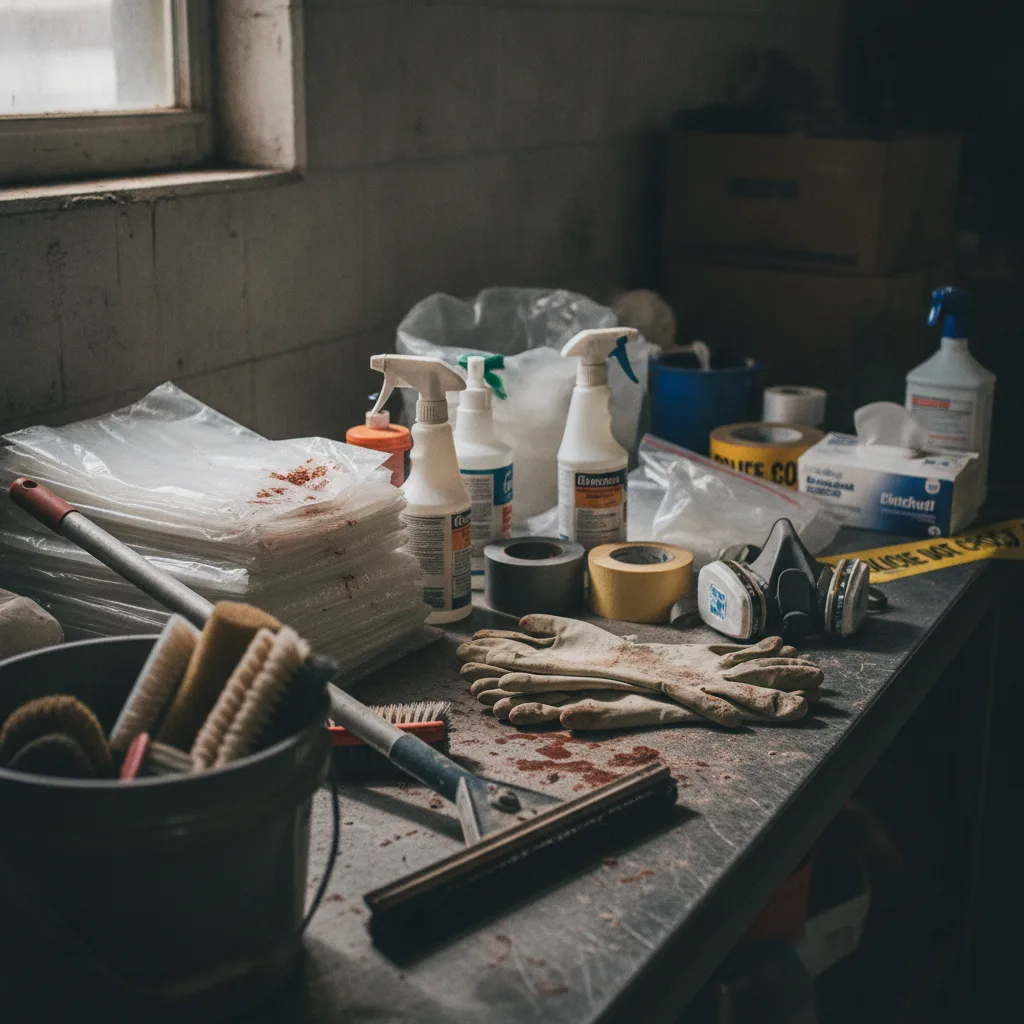
Our trained technicians establish containment to prevent cross-contamination to other rooms or units. All contaminated porous materials — flooring, subfloor, drywall sections, insulation — are removed, bagged, and transported as regulated biohazard waste. All remaining surfaces are treated with EPA-registered disinfectants rated for bloodborne pathogen elimination. Odor is addressed at the molecular level using hydroxyl generators or thermal fogging, not surface sprays. A final clearance verification confirms the space is safe for reoccupancy.
A Practical Decision Rule
If you can smell decomposition odor anywhere in the structure — not just in the room where the person was found — the contamination has likely spread through the HVAC system or through flooring gaps. In that situation, the remediation scope must include duct cleaning and subfloor inspection, not just the primary room. Tell the cleanup team the odor radius when you first call; it helps them arrive with the right equipment.
To find the team serving your area, browse our local teams in 149 cities on the Locations page or call (727) 649-8014.
Frequently Asked Questions
Is professional unattended death cleanup covered by insurance?
Most homeowner, renter, landlord, and commercial property insurance policies cover professional biohazard cleanup, including unattended death remediation, under property damage provisions. We bill the insurer directly and handle the claim documentation. Most customers pay $0 out of pocket. Coverage varies by policy, so we recommend calling your insurer and calling us — we can help you understand what to expect before you file.
Can I clean up an unattended death scene myself?
No. Decomposed biological material contains bloodborne pathogens that household cleaning products cannot neutralize. OSHA regulations require that biohazard waste be handled and disposed of as regulated medical waste. Improper handling also risks permanently contaminating subfloor, insulation, and HVAC systems, which increases long-term remediation costs and can render a property unsellable or unrentable.
Who is responsible for cleanup — the family, landlord, or property owner?
Responsibility depends on the property type. In a rental property, the landlord or property owner is typically responsible for restoring the unit to a habitable condition. The landlord's property insurance usually covers the remediation cost. In a privately owned home, the estate or family typically manages the cleanup, and the homeowner's insurance policy usually covers it.
How long does professional cleanup take?
The duration depends on the size of the affected area, how long the death went undiscovered, and which materials require removal. A single-room remediation in an apartment is usually quicker than a situation where decomposition fluid has penetrated subfloor or spread through an HVAC system, which requires additional work and may take longer. We provide a scope assessment when we arrive so you have a clear timeline before work begins.
The odor is in other rooms, not just where the person was found. Does that affect cleanup?
Yes. Odor spreading to other rooms is a reliable indicator that decomposition compounds have entered the HVAC system or migrated through flooring gaps into adjacent spaces. The remediation scope must include those areas — duct cleaning, subfloor inspection, and treatment of secondary rooms — not only the primary location. Mention the odor radius when you first call so our technicians arrive with the right equipment.
Do I need to be present during cleanup?
You do not need to be physically present throughout the work. Many family members and landlords choose not to be on-site during remediation. We require access to the property and a point of contact reachable by phone. We document the work with photos and provide a completion report, which is also submitted to your insurer as part of the claim.
What if I am not sure my insurance covers it?
Call us before you decide. We work with insurance companies regularly and can walk you through the coverage question at no obligation. Most policies do cover it, and filing a claim costs you nothing. We handle the documentation and billing directly with your insurer, so there is no financial risk in starting the process.
We Are Here — Call Anytime, Day or Night
Our trained technicians are ready to respond 24 hours a day. If the scene has been released by authorities, we can begin the assessment process as quickly as possible.
Most homeowner, renter, landlord, and commercial policies cover professional unattended death cleanup in full. We bill your insurer directly. You pay $0 out of pocket in most cases.
Call us now at (727) 649-8014 or find the team serving your area at our Locations page. We will walk you through the insurance process, the cleanup scope, and every next step — with no pressure and no upfront cost.
You do not have to manage this alone: Integrity Crime Scene Services, a crime scene and biohazard cleanup company with local teams across the U.S., handles the cleanup and the claim so you can focus on what matters.