What does homicide cleanup involve?
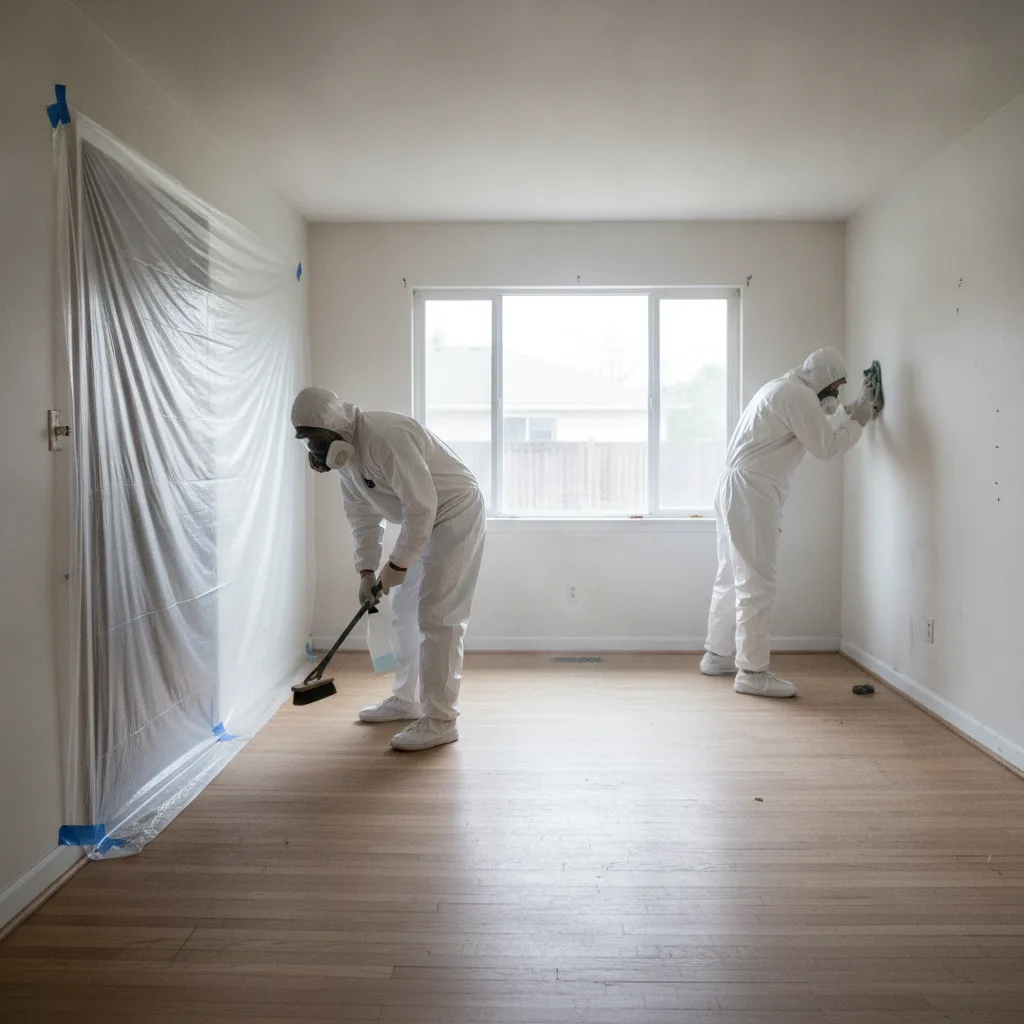
Homicide cleanup means removing everything the crime left behind and making the space safe again: blood, tissue, body fluids, fingerprint powder and anything they soaked into. It starts only after detectives have collected their evidence and released the scene.
Homicide scenes are often spread across several rooms, and blood travels further than it looks. The work has three parts: removing contaminated materials, disinfecting every surface that's left, and removing the odor at its source. Homicide cleanup is one type of crime scene cleanup, done with the same training, equipment and discretion.
On site within 1–4 hours. For covered jobs, you pay $0 out of pocket.
Call (727) 649-8014Who is responsible for cleanup after a homicide?
The property owner or the family. Police, detectives and the medical examiner don't clean. The medical examiner or coroner removes the body; once the scene is released, everything else becomes the owner's responsibility.
That's why the first question we ask on the phone is whether the scene has been released. If it has, a team can be on site within 1–4 hours. If it hasn't, we tell you what to expect and come as soon as it is.
How far does blood spread through a home?
| Material | What happens |
|---|---|
| Carpet | Blood soaks through to the pad and often to the subfloor below. The visible stain is the smallest part. |
| Hard floors | Blood runs into seams, grout and gaps between boards. |
| Walls and ceilings | Spatter reaches higher and further than it seems, including ceilings, vents and wall seams. |
| Furniture and mattresses | Absorbent materials hold blood inside and usually have to be removed. |
Wiping the surface isn't enough: contamination left inside porous materials keeps carrying bloodborne pathogens and odor. That's what the remediation steps below are designed to deal with.
How we clean up after a homicide
- Release and arrivalWe confirm the scene has been released and arrive within 1–4 hours in an unmarked vehicle.
- Assessment and estimateWe trace how far blood and fluids reached, including under flooring, and give you a written, itemized estimate.
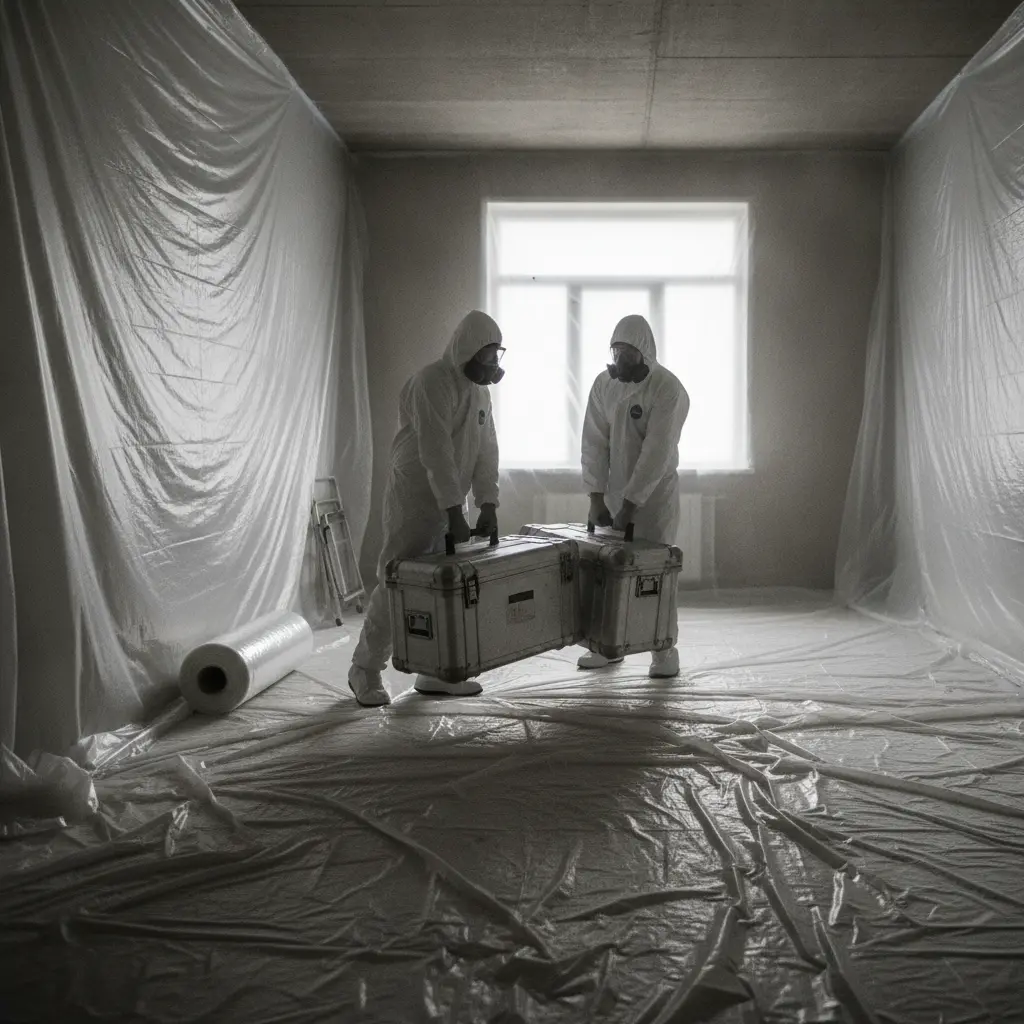
- ContainmentThe work area is sealed off with plastic barriers so contamination doesn't spread to clean rooms.
- Removal of porous materialsCarpet, padding, subfloor sections, drywall, furniture and any personal items you agree to discard are bagged, sealed and removed from the property.
- Cleaning and disinfectionFloors, walls, ceilings and every remaining surface are cleaned, then disinfected with EPA-registered, hospital-grade disinfectants.
- Odor removalThe source is gone at this point; we then treat the air and remaining surfaces.
What standards apply to homicide cleanup?
Two federal agencies set the rules that matter most. OSHA's Bloodborne Pathogens Standard (29 CFR 1910.1030) covers how workers protect themselves from blood and other potentially infectious materials. The EPA registers the disinfectants, and each product's label sets how long it has to stay wet on a surface to work.
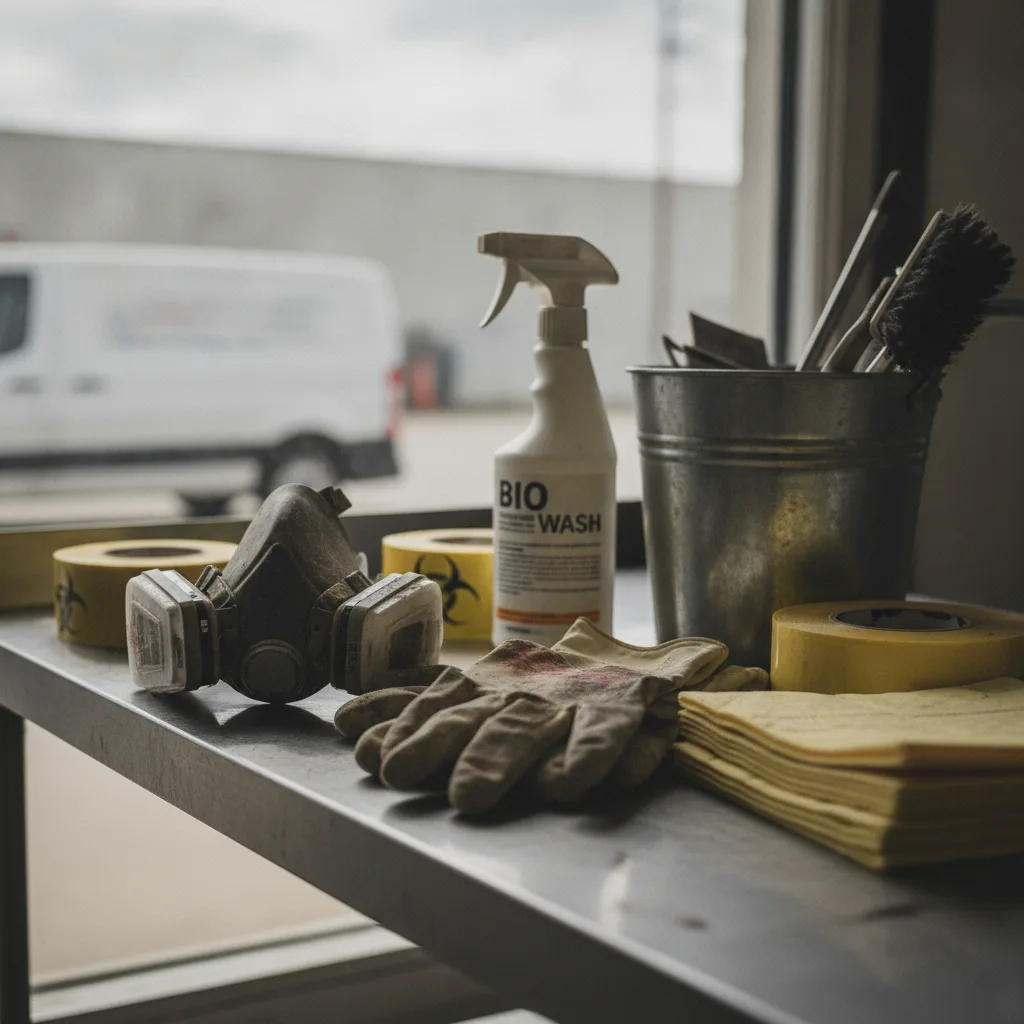
Our technicians follow OSHA's Bloodborne Pathogens Standard, wear full personal protective equipment and use EPA-registered, hospital-grade disinfectants. The industry also has a voluntary standard for trauma and crime scene cleanup, ANSI/IICRC S540.
Who pays for homicide cleanup?
Crime victim compensation depends on the state. Some state programs reimburse part of the cleanup cost, usually up to a set limit and only after insurance has paid. Others mainly cover medical, funeral and counseling costs. A victim advocate at the police department or the district attorney's office can tell you what your state's program pays for and help you apply.
See crime victim compensation and the other ways cleanup gets paid for.
How much does homicide cleanup cost?
Our cleanup jobs range from about $2,000 to $35,000. Where a job falls in that range depends on how far the contamination spread and what has to be removed. You get a written, itemized estimate before any work starts, and for jobs your policy covers you pay $0 out of pocket.
| What affects the price | Why |
|---|---|
| Number of rooms affected | A scene in one room is a smaller job than blood across a hallway and several rooms. |
| How deep blood soaked | Blood that reached the subfloor means cutting out and removing flooring. |
| Time before cleanup | The longer blood sits, the further it soaks and the stronger the odor. |
| Furniture and belongings | Contaminated mattresses, couches and items have to be removed and disposed of. |
If the homicide happened in a rental
The property owner is responsible for having the unit cleaned before anyone moves back in. Landlords usually ask how much of the unit is affected and how fast it can be made safe. The written estimate answers the first; the 24/7 line and 1–4 hour arrival answer the second.
We work with the landlord or property manager directly and keep the job discreet for other tenants.
If you've lost someone
You don't have to see the scene again or handle any of it yourself. Once the police release the home, one call starts the cleanup, and we deal with the insurance company.
Before we arrive, keep people and pets out of the affected rooms and don't try to clean or move anything. Close the door to the room if you can.
Homicide cleanup questions
Straight answers to what families and landlords ask us most.
Who cleans up after a homicide?
Not the police. Once detectives release the scene, the property owner or the family is responsible for cleanup, and it's done by a crime scene cleanup company like Integrity Crime Scene Services.
When can homicide cleanup start?
As soon as the police release the scene. Investigators may hold it for hours or days to collect evidence.
Does insurance pay for homicide cleanup?
Homeowners, renters and landlord policies usually cover it. We bill your insurer directly, and covered jobs cost you $0 out of pocket.
Does crime victim compensation pay for cleanup?
It depends on the state. Some state programs reimburse part of the cleanup cost, usually up to a set limit and only after insurance. Others mainly pay medical, funeral and counseling costs. A victim advocate at the police department or district attorney's office can tell you what your state covers.
What standards apply to homicide cleanup?
OSHA's Bloodborne Pathogens Standard covers worker safety, and disinfectants are registered with the EPA. The industry also has a voluntary standard for this work, ANSI/IICRC S540. Our technicians follow OSHA's standard and use EPA-registered, hospital-grade disinfectants.
How much does homicide cleanup cost?
Our cleanup jobs range from about $2,000 to $35,000. A scene in one room costs less than one spread across several rooms where blood reached the subfloor. You get a written, itemized estimate before work starts.
Will the neighbors know what happened?
We arrive in unmarked vehicles with no signage, and we don't discuss the job with neighbors or the media.