Blood is a regulated biohazard under federal law. When blood is present at a crime scene, accident site, or location of an unattended death, it carries live infectious agents that household cleaning products cannot reliably eliminate. Integrity Crime Scene Services, a 24/7 crime scene and biohazard cleanup company with local teams across the U.S., responds to blood cleanup requests in homes, apartments, businesses, and vehicles every day of the year. Blood cleanup is one part of our broader biohazard & crime scene cleanup services, and that page gives the full overview of what we handle beyond blood.
This page explains the biology of blood as a hazardous material, how bloodborne pathogens behave on common surfaces, why standard disinfectants fall short of regulatory standards, and what professional remediation involves. If you need immediate assistance, call (727) 649-8014. Find the team closest to you among our local teams in 149 cities.
Most insurance policies cover this service completely. You are not expected to pay out of pocket. We handle the insurance claim from start to finish.
Most customers pay $0 out of pocket — we bill your insurance directly.
Call (727) 649-8014Insurance Coverage & Cost: Most Customers Pay $0
Most homeowner, renter, landlord, and commercial property insurance policies classify professional blood and biohazard cleanup as a covered loss, meaning the insurer — not you — pays the bill. We bill your insurance company directly and manage every step of the claim process, from initial documentation through final settlement. You are not asked for upfront payment at any point.
Because policy language varies, we say "most policies" rather than "all policies." When you call, we review your coverage with you at no obligation. Most policyholders owe $0 out of pocket after professional blood cleanup. Blood cleanup events often trigger coverage under homeowners, auto, landlord, or state victim compensation programs, depending on where and how the event occurred. For policy types, who pays, and how the direct billing process works, see insurance coverage for biohazard cleanup.
- Direct insurance billing: We submit all documentation to your insurer on your behalf.
- Claim management: We communicate with adjusters, provide required remediation reports, and follow up until the claim closes.
- No upfront cost: Work begins without requiring payment from you first.
- All policy types accepted: Homeowner, renter, landlord, and commercial policies are all eligible.
To confirm coverage and start the process, call (727) 649-8014.
Blood as a Biohazard: What Federal Standards Say
OSHA's Bloodborne Pathogens Standard (29 CFR 1910.1030) classifies human blood as a Category A biohazardous material. This regulation exists because blood can carry pathogens capable of causing serious or fatal disease in exposed individuals. Three pathogens dominate the clinical concern: human immunodeficiency virus (HIV), hepatitis B virus (HBV), and hepatitis C virus (HCV).
HIV can survive in dried blood at room temperature for up to several days under laboratory conditions, though infectivity declines as the blood dries. HBV is considerably more durable: studies cited by the CDC confirm HBV can remain infectious on environmental surfaces for seven or more days at room temperature. HCV survival on surfaces is shorter but still measurable at up to four days in certain conditions. These survival windows mean that blood that appears dry is not necessarily safe to handle without engineering controls and appropriate personal protective equipment (PPE). For this reason, blood from any source must be treated as potentially infectious, because bloodborne pathogens including HIV, hepatitis B, and hepatitis C can survive on surfaces for periods that far exceed common assumptions. The types of bloodborne pathogens, their environmental survival, and exposure risk at contaminated scenes are examined further under bloodborne pathogen survival times. This is the scientific foundation for why EPA-registered disinfectants with specific contact times are required, not household cleaners.
Beyond these three primary pathogens, blood can carry MRSA, C. difficile, and other bacterial agents. Volume matters, but even a small amount of blood on a porous surface such as carpet or unfinished wood represents a genuine exposure risk if handled without protection.
The CDC and OSHA both require that blood cleanup in occupational settings be performed by trained workers wearing gloves, eye protection, and respiratory protection as appropriate. The same biological hazards that make this a legal workplace requirement make it a practical necessity in residential and commercial settings as well. OSHA's bloodborne pathogens standard is the primary federal regulation governing how professional technicians must handle blood cleanup, from engineering controls and PPE to sharps disposal and exposure incident response. The requirements, applicability, and enforcement of the OSHA bloodborne pathogens standard for biohazard cleanup are set out in full on its own page.
How Blood Penetrates Surfaces — and Why That Matters
Blood does not stay on the surface you can see. Within minutes of a large-volume bleed, blood begins wicking through porous materials by capillary action. Understanding which surfaces it reaches — and how deeply — determines the full scope of remediation required.
Carpet and Padding
Carpet fibers absorb blood rapidly. The liquid passes through the pile layer and saturates the backing within minutes. It then pools in the padding beneath, and from the padding it can reach the subfloor below. By the time blood is visible on the surface of carpet, contamination has typically penetrated at least two layers deeper. Surface cleaning alone does not address the pad or subfloor.
Hardwood Flooring
Finished hardwood slows initial absorption, but blood finds gaps between boards and penetrates through end-grain cuts, cracks, and worn finish areas. Once blood reaches the tongue-and-groove joints or the subfloor, it is inaccessible without lifting boards. Staining and odor-generating decomposition occur in this hidden zone even after the visible surface appears clean.
Concrete
Unsealed or lightly sealed concrete is highly porous. Blood penetrates the surface pores of concrete and can migrate several millimeters or more depending on porosity and exposure time. This depth makes topical disinfection insufficient; enzymatic treatment or grinding and sealing of the affected zone is often required.
Vehicles
Vehicle interiors combine multiple surface types simultaneously: carpet, foam seating, plastic trim, fabric headliners, and metal floor pans. Blood flows through seams into structural cavities that are not accessible without partial disassembly. Vehicle blood cleanup is among the most technically demanding surface scenarios we address.
Accurate scope assessment — before work begins — is the step most frequently skipped when property owners attempt self-cleanup. Remediating only the visible surface leaves viable pathogens in place.
Why Bleach and Household Cleaners Cannot Complete Blood Cleanup
Bleach and household cleaners fail at blood cleanup for three distinct reasons: organic material inactivates them, they cannot reach sub-surface contamination, and they do not meet EPA registration requirements. Household bleach (sodium hypochlorite) is a broad-spectrum disinfectant effective against many pathogens when used correctly on non-porous surfaces.
First, organic load inactivates bleach. Bleach loses disinfecting power rapidly in the presence of organic material — including blood proteins. When bleach contacts blood directly, the available chlorine reacts with proteins rather than penetrating to kill pathogens. The CDC recommends pre-cleaning to remove gross contamination before applying any disinfectant. Most people applying bleach to blood skip this step or are unaware of it.
Second, bleach cannot reach sub-surface contamination. On porous surfaces, bleach applied to the surface does not follow the same capillary pathway blood used to penetrate. It stays near the surface while viable pathogens remain deeper in the material.
Third, EPA registration requirements are not met. The EPA's Design for the Environment (DfE) program and the EPA's registered disinfectant list (List D for HBV/HCV) specify products that have passed efficacy testing against specific pathogens. Many consumer-grade disinfectants, including standard bleach solutions mixed at home, are not on EPA List D for bloodborne pathogens when applied by untrained individuals under real-world conditions. Professional remediation uses EPA-registered hospital-grade disinfectants formulated and applied to meet these standards. The selection of disinfectants for blood cleanup is not arbitrary: specific EPA-registered products with demonstrated efficacy against bloodborne pathogens must be used, with application method and contact time verified. Biohazard cleanup equipment and disinfectants, including their types, purpose, and regulatory standards, are broken down in the resource on EPA-registered disinfectants and equipment.
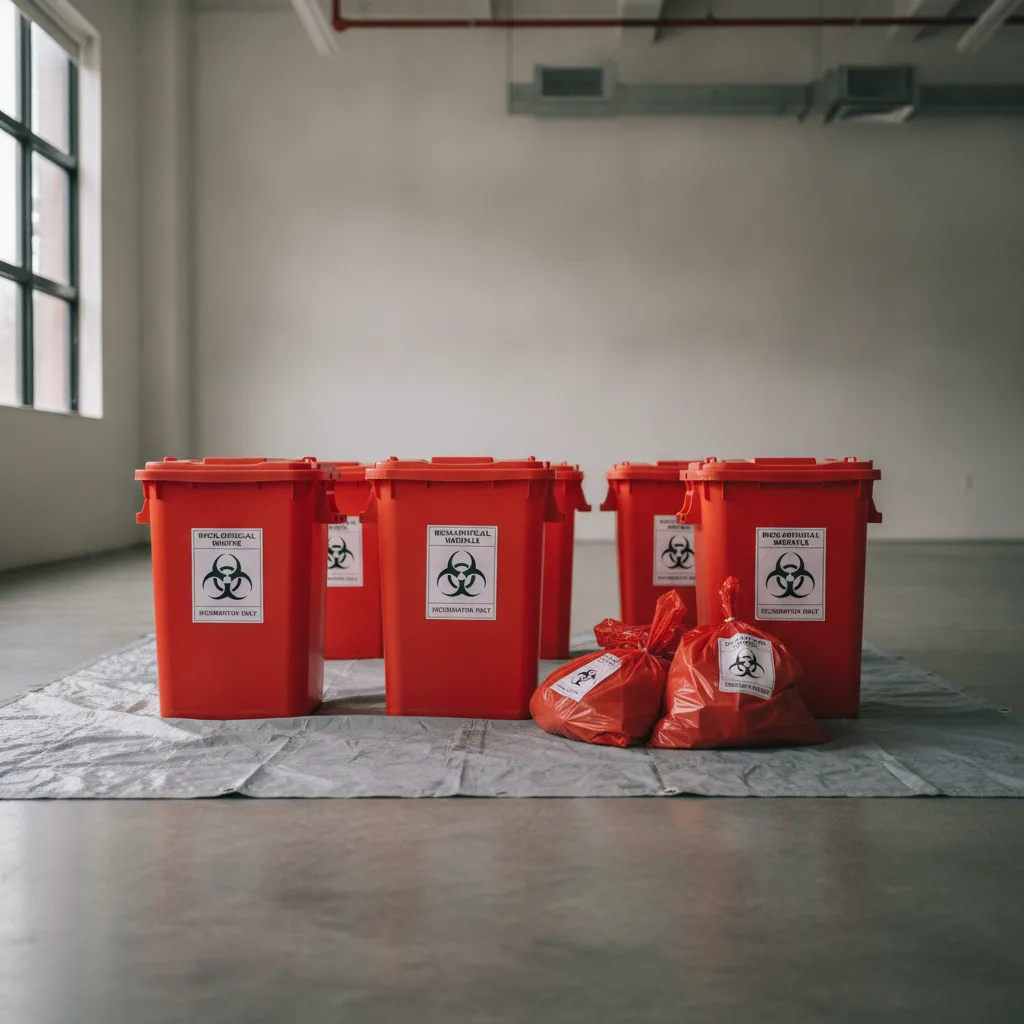
Beyond disinfection chemistry, blood cleanup generates regulated medical waste under state and federal rules. Used PPE, contaminated materials, and saturated absorbents must be segregated, containerized in biohazard-labeled bags, and transported to a licensed medical waste treatment facility. Household disposal — including placing contaminated materials in regular trash — is prohibited.
Most customers pay $0 out of pocket — we bill your insurance directly.
Call (727) 649-8014The Professional Blood Cleanup Process: Step by Step
Professional blood cleanup moves through seven steps: scene assessment, containment, protective equipment, gross contamination removal, EPA-registered disinfection, odor treatment, and regulated waste disposal with clearance documentation. Each step is designed to satisfy both health protection standards and regulatory disposal requirements.
Step 1 — Scene Assessment and Scope Documentation
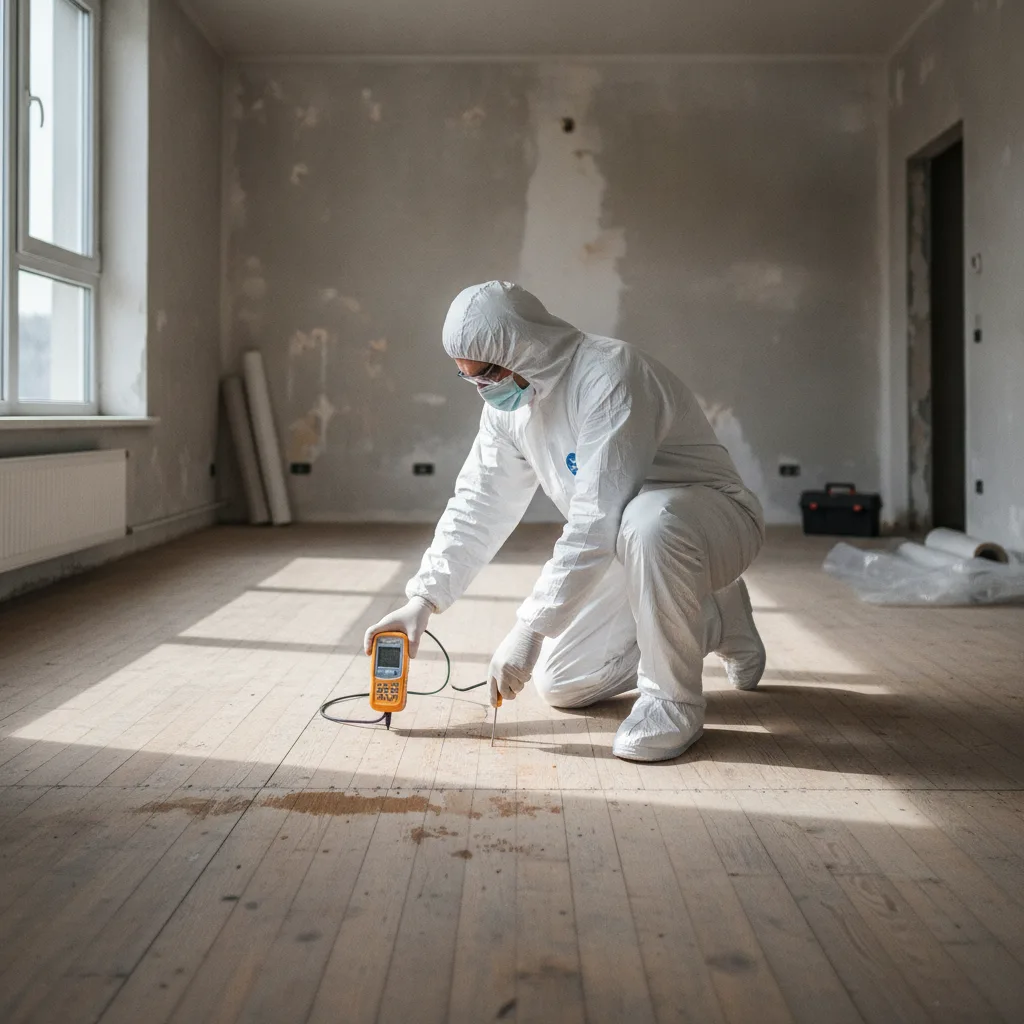
Trained technicians assess all affected surfaces, test for hidden contamination using presumptive reagents (such as luminol-based products that identify blood not visible to the naked eye), and document the scope in writing for insurance purposes. This documentation is submitted directly to your insurer as part of the claim.
Step 2 — Containment Setup
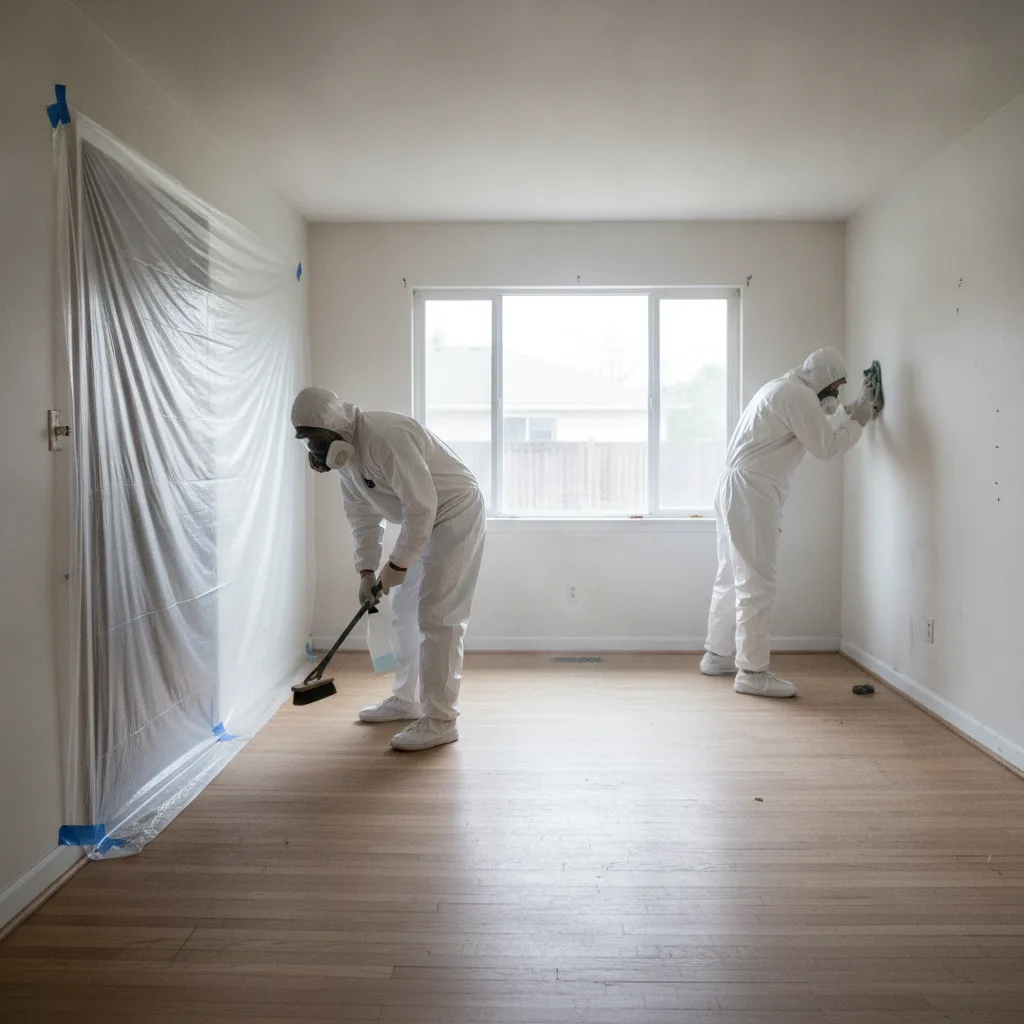
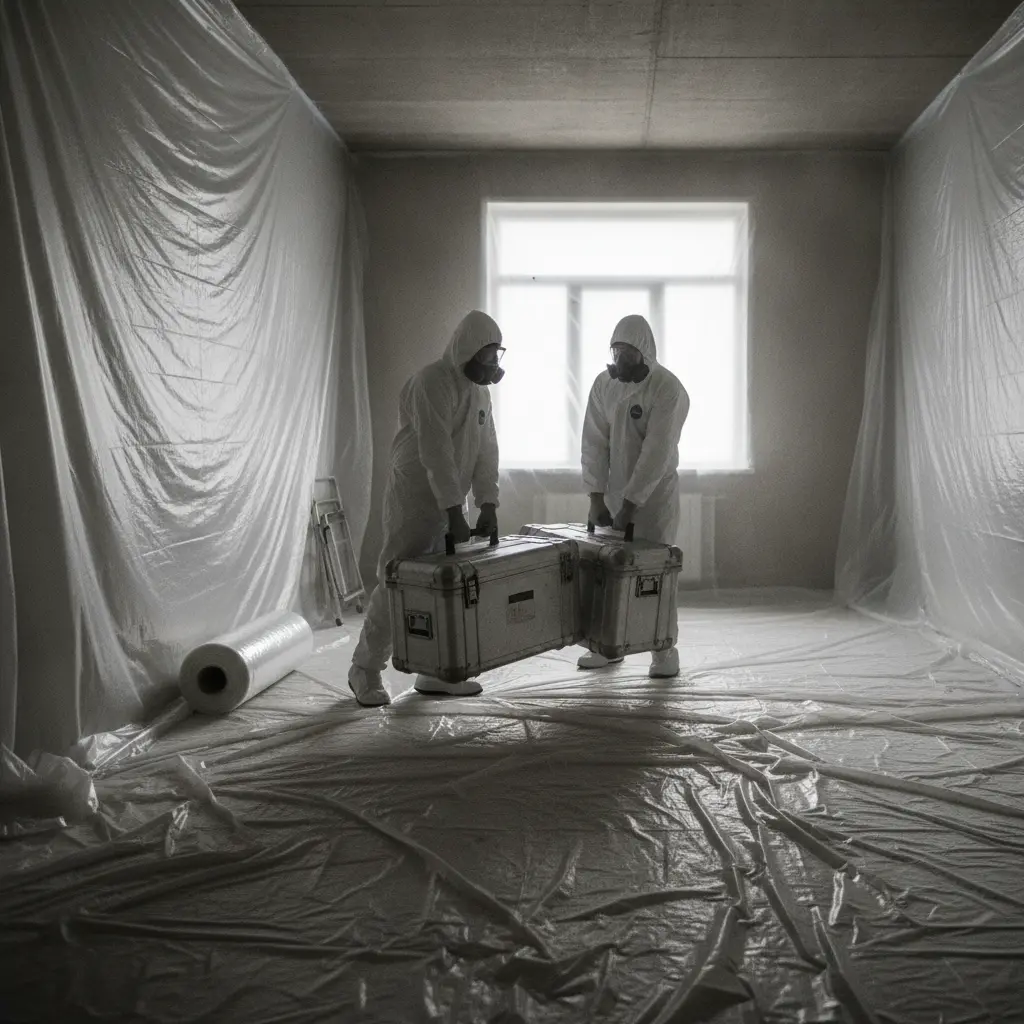
Technicians establish a containment perimeter using poly sheeting and negative air pressure where appropriate. Containment prevents cross-contamination of unaffected areas of the property during removal work.
Step 3 — Personal Protective Equipment
All personnel working in the contamination zone wear minimum PPE including nitrile or latex gloves (double-gloved), Tyvek suits, eye protection, and respirators rated for biological aerosols.
Step 4 — Gross Contamination Removal
Saturated materials — carpet, padding, drywall sections, insulation, mattresses — are removed and placed directly into sealed, labeled biohazard containers. This step exposes sub-surface contamination so it can be treated. Skipping removal and treating surfaces in place is the most common error in inadequate cleanup attempts.
Step 5 — EPA-Registered Disinfection
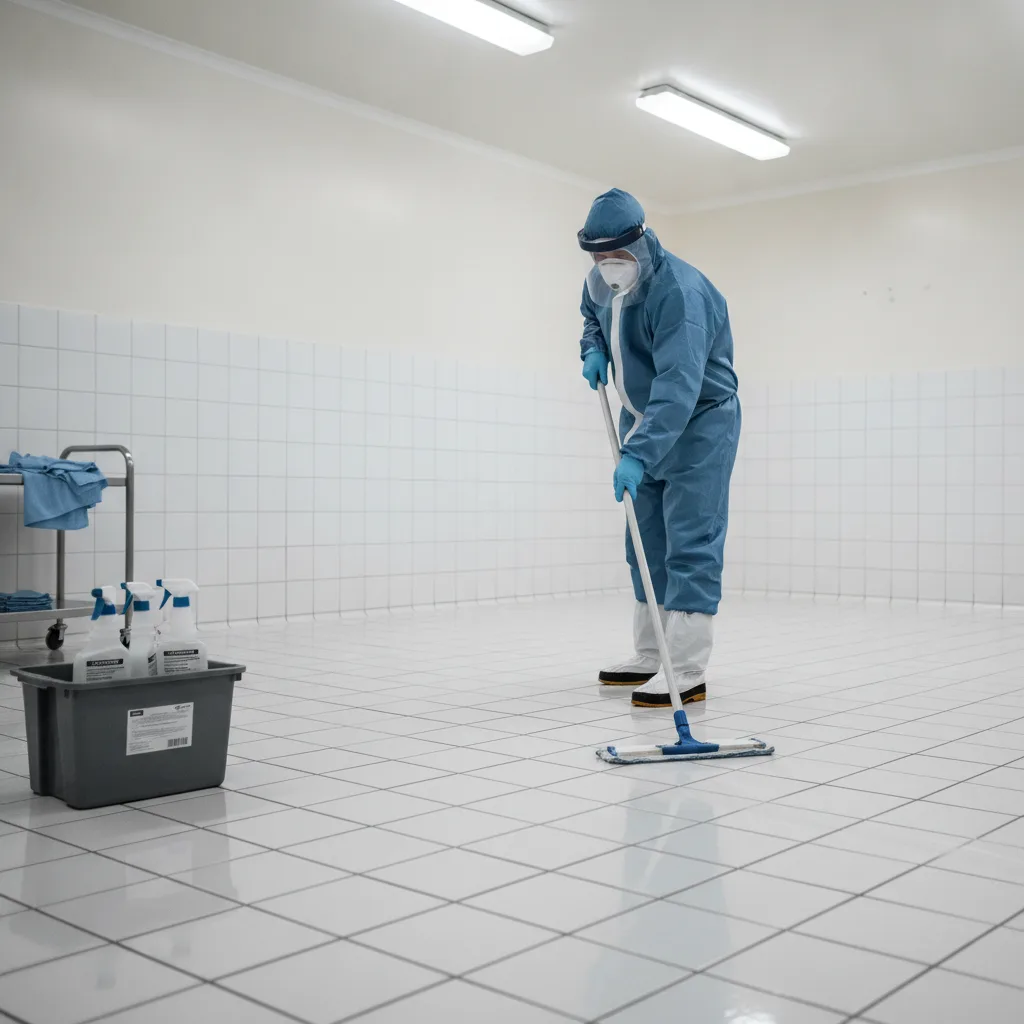
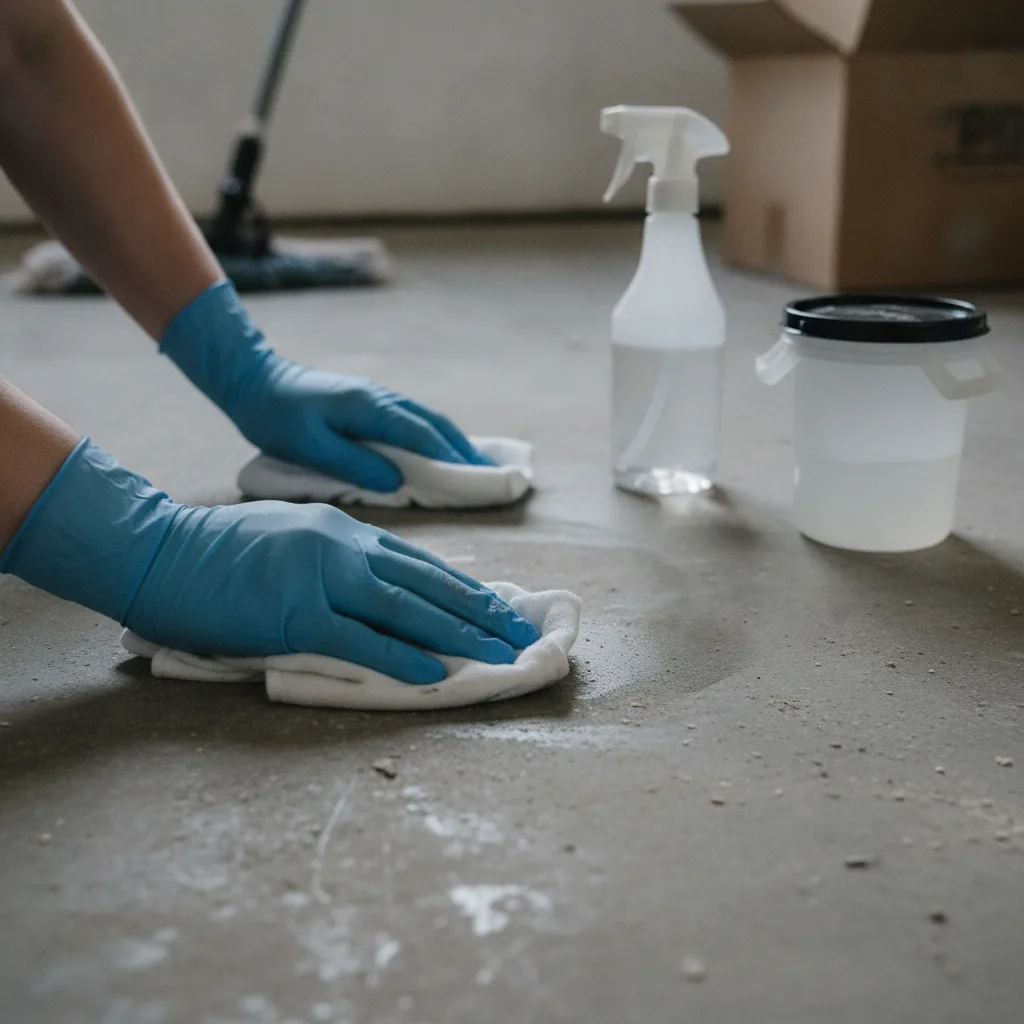
All remaining hard surfaces are cleaned to remove residual organic material, then treated with EPA List D-registered hospital-grade disinfectants at label-specified dwell times. Enzymatic solutions are applied to porous substrates where complete removal was not possible. Dwell time — the period the disinfectant must remain wet on the surface — is precisely timed for each product used.
Step 6 — Odor Treatment
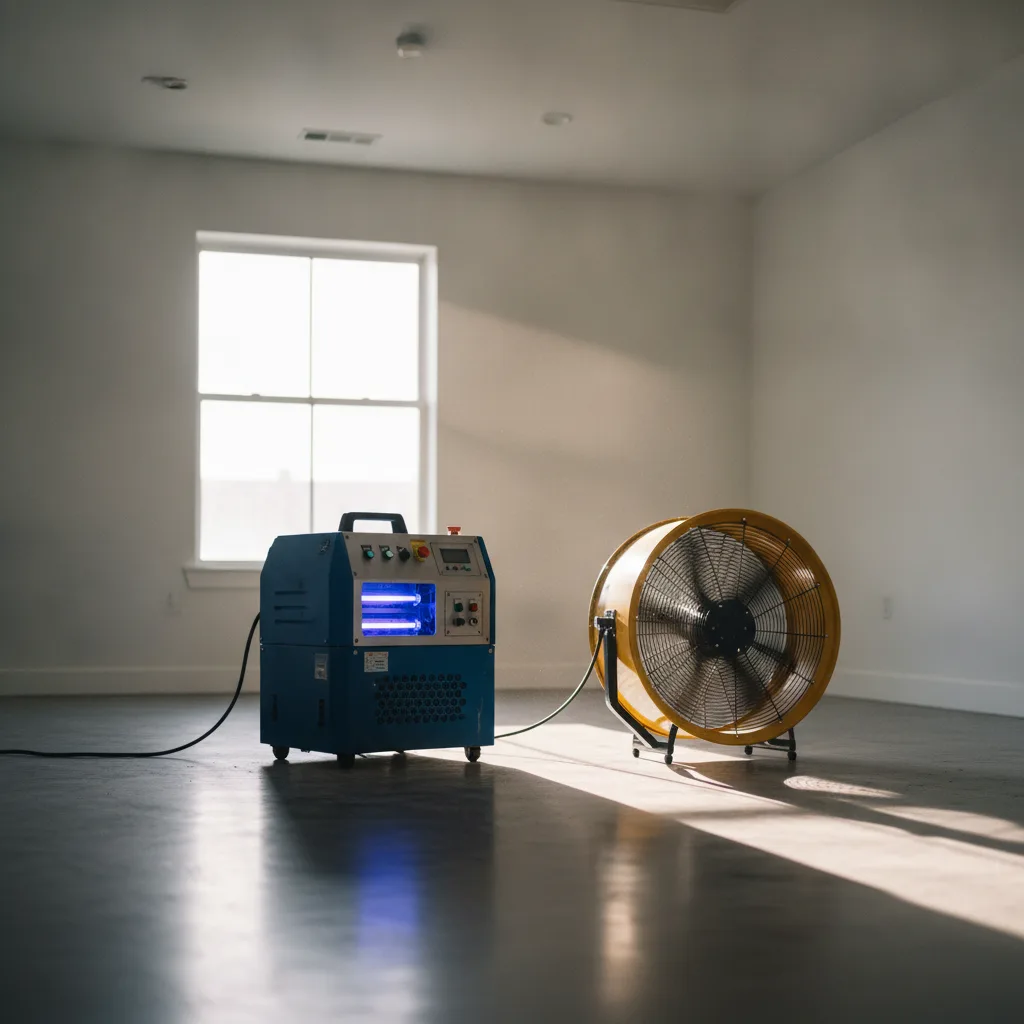
Odor treatment uses hydroxyl generators, ozone application in unoccupied spaces, or thermal fogging with EPA-registered products depending on the substrate and severity. It is needed because blood decomposition produces volatile organic compounds (VOCs) detectable even after visible contamination is removed.
Step 7 — Regulated Waste Disposal and Clearance Documentation
All biohazardous waste is transported by licensed medical waste carriers to approved treatment facilities. We provide written clearance documentation confirming remediation is complete — a document your insurer requires to close the claim and that you may need for property transactions.
When to Call a Professional: Signs Blood Cleanup Is Beyond DIY
Call a professional blood cleanup service when any of the following conditions exist. Do not attempt cleanup without proper PPE in any of these situations.
- Volume exceeding a few drops: Any blood loss sufficient to visibly pool, spread across a surface, or soak into a material requires professional handling. There is no reliable threshold below which self-cleanup is safe, but volume is a practical indicator of penetration depth.
- Porous surface involvement: Blood on carpet, fabric, unfinished wood, drywall, or concrete has almost certainly penetrated beyond the visible layer.
- Unknown pathogen status: If the health status of the person who bled is unknown — which is virtually always the case at a crime scene or unattended death — treat the blood as potentially infectious for all three primary bloodborne pathogens.
- Odor present after surface appears clean: Persistent iron or organic odor indicates residual contamination below the surface or in concealed spaces.
- Multi-room or multi-surface contamination: Blood tracked through a property by foot traffic or emergency responders creates a scattered contamination pattern that requires systematic presumptive testing to fully map.
- Vehicle contamination: Blood in a vehicle requires partial disassembly to reach all affected surfaces.
- Scene involved a death: Decomposition begins within hours. Blood associated with unattended death combines pathogen risk with decomposition fluid and odor that require specialized treatment.
Related Biohazard Cleanup Services
Blood cleanup is frequently one component of a broader remediation need. If the scene involves more than blood, you may need biohazard cleanup or crime scene cleanup instead. The pages below cover the full scope of services we provide:
- Crime Scene Cleanup
- Unattended Death Cleanup
- Suicide Cleanup
- Homicide Cleanup
- Decomposition Odor Removal
- Biohazard Cleanup
- Trauma Scene Cleanup
- Hoarding Cleanup
Frequently Asked Questions About Blood Cleanup
The answers below cover insurance, bleach, pathogen survival, affected surfaces, regulations, finding a local team, documentation, and who typically calls for blood cleanup.
Is blood cleanup covered by homeowner or renter insurance?
Most homeowner, renter, landlord, and commercial property policies cover professional blood and biohazard cleanup as part of a covered loss. We bill your insurance company directly and manage the claim. Most customers owe $0 out of pocket. Because individual policy language varies, we review coverage with you before work begins at no cost or obligation.
Why can't I clean up blood myself with bleach?
Bleach loses disinfecting power when it contacts blood proteins directly. It also cannot penetrate porous surfaces to reach sub-surface contamination. Professional cleanup uses EPA List D-registered hospital-grade disinfectants applied at precise concentrations and dwell times after all gross contamination has been physically removed — a sequence that household products cannot replicate.
How long do bloodborne pathogens survive on surfaces?
HBV can remain infectious on environmental surfaces for seven or more days at room temperature, according to CDC data. HCV can survive on surfaces for up to four days under certain conditions. HIV survives in dried blood for up to several days, though infectivity declines as drying occurs. These windows mean dried blood is not automatically safe to handle without protection.
What surfaces are most commonly affected in blood cleanup?
Carpet and hardwood flooring are commonly affected in residential settings. Concrete and vehicles are also frequently involved. Each surface type requires a different remediation approach because blood penetrates each material differently and to different depths.
What regulations govern blood cleanup?
OSHA's Bloodborne Pathogens Standard (29 CFR 1910.1030) governs worker protection during blood cleanup. The EPA regulates which disinfectants are registered for use against specific bloodborne pathogens (EPA List D). State environmental agencies regulate the generation, transport, and treatment of medical and biohazardous waste. Professional remediation firms are expected to follow all three regulatory frameworks; individual homeowners are not equipped to do so.
How do I find a blood cleanup service near me?
Call (727) 649-8014) at any hour. We have local teams across the U.S. and take calls 24 hours a day.
What documentation will I receive after cleanup?
We provide written clearance documentation confirming that remediation is complete. This document is submitted to your insurer as part of the claim and can also be important if you plan to sell or lease the property after the incident.
Who typically calls for blood cleanup services?
Family members of the person involved and landlords or property managers are among the most common callers. The need arises in both apartments and houses.
Get Immediate Help — Most Policies Cover 100% of the Cost
Help with blood cleanup is available every hour of every day. If blood contamination is present at your property, do not attempt cleanup without professional equipment and training. The health risk is real, and the regulatory requirements for disposal cannot be met with household supplies.
Call (727) 649-8014) now to reach Integrity Crime Scene Services, a round-the-clock biohazard and crime scene cleanup company with local teams across the United States, and we will respond as quickly as possible. Most homeowner, renter, landlord, and commercial policies cover this service fully — you pay $0 out of pocket, we bill your insurer directly, and we manage the entire claim.