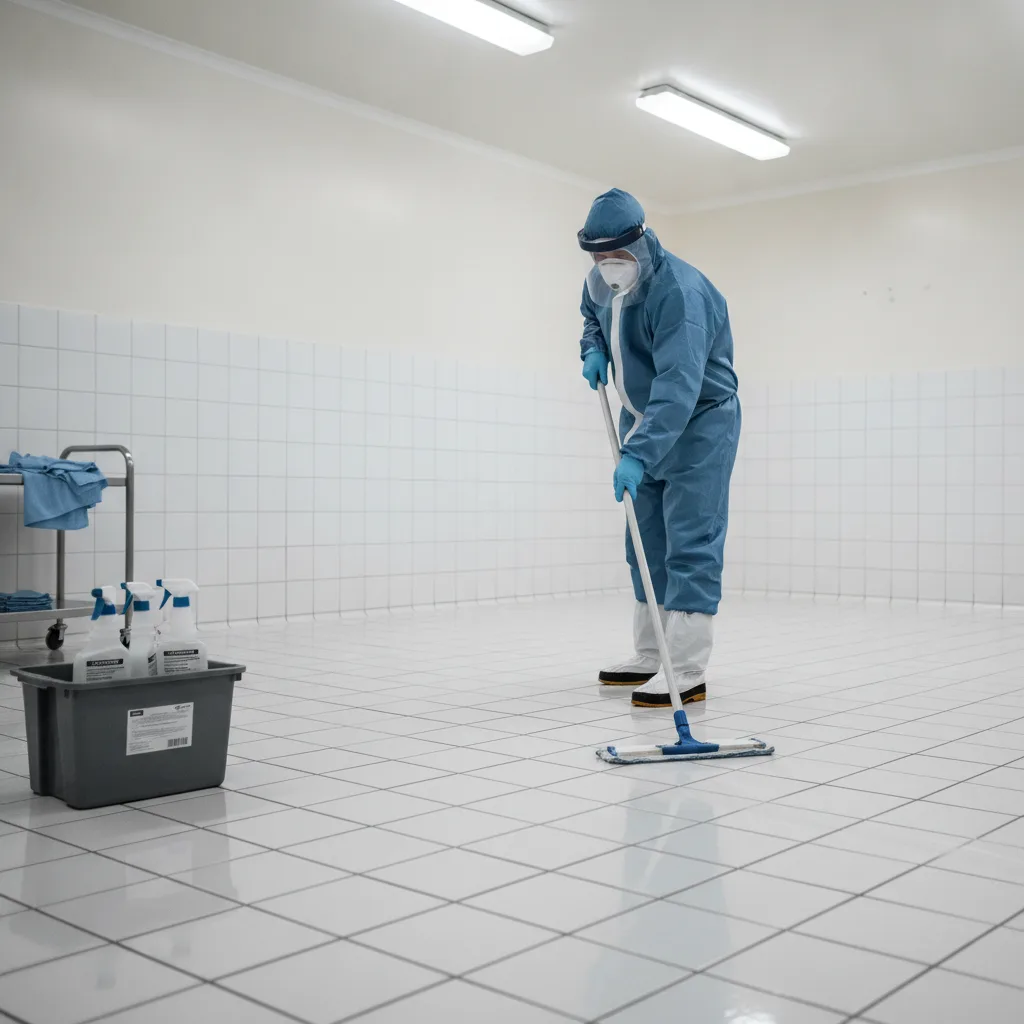
Suicide cleanup in a rental unit is a biohazard remediation service that removes blood, biological matter, and decomposition residue from an apartment after an unattended or witnessed death — with the defining attribute that responsibility, legal obligation, and insurance coverage are split between the landlord and the tenant's family in ways that differ significantly from owner-occupied properties. Integrity Crime Scene Services is a 24/7 crime scene and biohazard cleanup company with local teams across the U.S. that handles this work for landlords and families alike.
As a nationwide provider of professional crime scene cleanup, we respond 24 hours a day to apartments, multi-family buildings, condominiums, and rented single-family homes across the country. Our trained technicians handle the cleanup, coordinate directly with the insurer, and let the people involved focus on what matters most. Rental-unit cleanup is one part of our broader suicide cleanup services, and that page gives the full overview.
If you or someone you know needs help now, call us at (727) 649-8014, or find the team nearest to you among our local teams in 149 cities across 31 states.
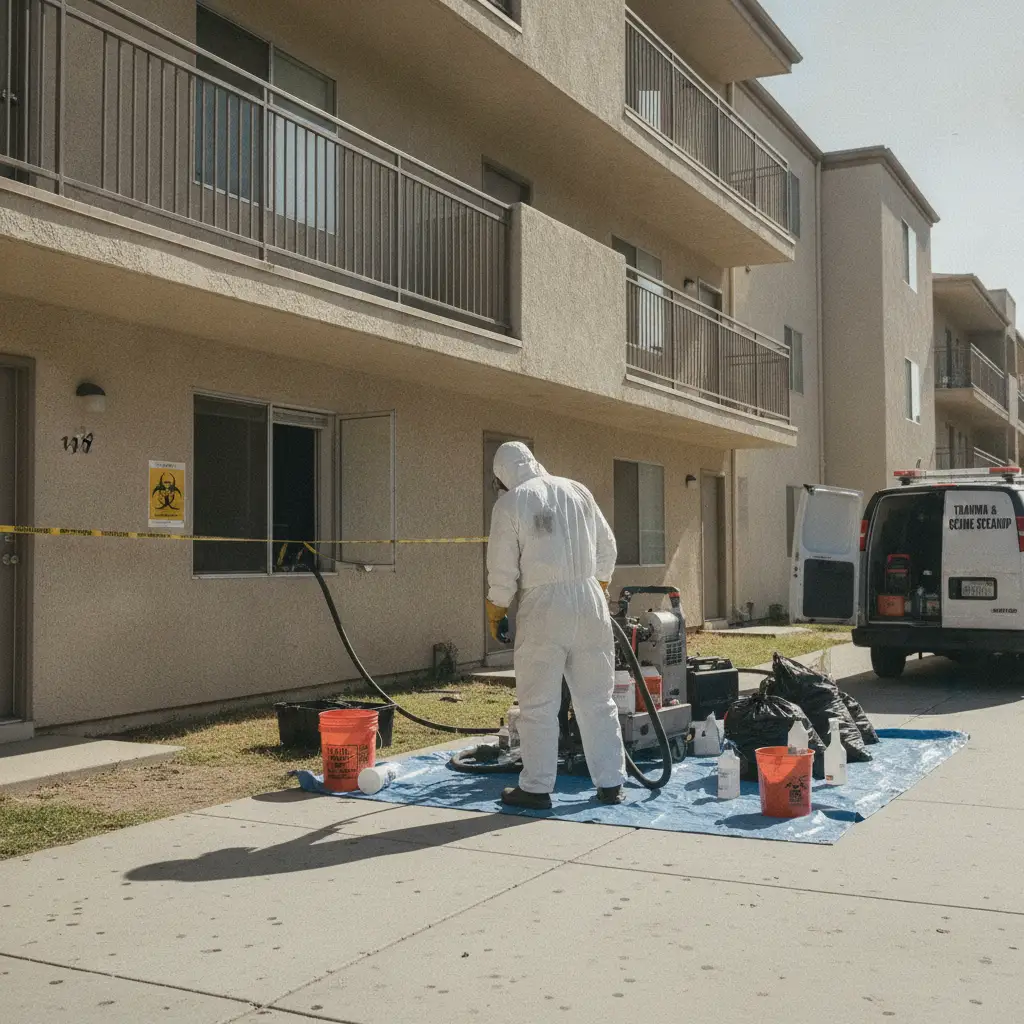
Most customers pay $0 out of pocket — we bill your insurance directly.
Call (727) 649-8014Insurance Coverage and Cost: What Landlords and Families Need to Know
Most landlord and commercial property insurance policies cover professional suicide cleanup as part of their biohazard or property restoration provisions, meaning the landlord typically pays $0 out of pocket. Most renter's insurance policies also include coverage that can apply to cleanup costs connected to the tenant's unit. We bill the insurance company directly and handle the entire claims process on your behalf — no upfront payment is required from you at any point. In an apartment, more than one policy may apply at the same time: the tenant's renters policy, the landlord's property policy, or a state crime victim compensation program. For insurance coverage, the page on policy types that cover biohazard cleanup is the source of truth for which policy type applies to which party. Integrity Crime Scene Services bills the insurer directly, so no party is required to pay out of pocket while coverage is confirmed.
Key facts about insurance and cost:
- Landlord policies: Most commercial property and landlord insurance policies cover biohazard remediation. We contact your insurer, document the loss, and submit the claim for you.
- Renter's insurance: A tenant's renter's policy may cover cleanup costs that fall within the tenant's estate or family's responsibility. We help families identify what their policy may include.
- No upfront payment: We never require payment before work begins. Our billing goes directly to the insurance carrier.
- Claim management: Our team prepares all documentation, photographs, and remediation reports that an insurer needs to process a claim.
- Truthful disclosure: We say "most policies" because coverage varies. We will tell you honestly what your specific policy covers before work starts.
To confirm coverage for your specific policy, call us at (727) 649-8014. We will review the policy with you at no charge.
Who Is Responsible for Cleanup in a Rental Unit
The landlord or property owner is legally responsible for restoring a rental unit to a safe, habitable condition after a suicide. This responsibility exists regardless of whether the tenant's lease is still active, whether the death was witnessed or unattended, and regardless of fault. A landlord cannot legally re-rent or re-enter the unit for lease purposes until all biohazardous material has been professionally removed and the space has been certified as safe.
The tenant's family has no legal cleanup obligation in most states. Family members are grieving. Placing cleanup responsibility on them — explicitly or implicitly — is both legally incorrect and deeply harmful. Some landlords mistakenly believe the estate is responsible; in practice, the property owner holds the duty to remediate the structure itself.
The practical split of responsibility looks like this:
- Landlord responsibility: All structural surfaces, shared systems (HVAC, subflooring, walls), and anything that is part of the leased unit must be remediated by the landlord.
- Family / estate responsibility: Personal belongings of the tenant — furniture, clothing, and personal effects — belong to the estate. The family decides what happens to those items.
- Coordination: We work with both parties simultaneously, so neither the landlord nor the family has to serve as intermediary.
If the responsible party is unclear in your situation, call us. We will help you identify who owns the cleanup obligation before any work begins.
Family Access, Coordination, and Compassion
The tenant's family has the right to access the unit to retrieve personal belongings, and that access should be coordinated with care. A suicide scene is not a standard property management situation. Family members may need time before they can enter. They may need to retrieve items that have sentimental or legal importance to the estate.
Our process accommodates family needs in a concrete way: we do not remove personal property without documented consent from the family or estate representative. We separate biohazard remediation of structural elements from handling of the tenant's belongings, so the family retains full control over personal effects.
Practical steps we take for family coordination:
- We speak with the family separately from the landlord when preferred.
- We provide a clear written scope of what we will and will not remove before work begins.
- We can hold personal items in a separate staging area while remediation of the structure proceeds, allowing the family more time to make decisions about belongings.
- We treat every interaction with the family as a grief support moment, not a transaction.
Families who are unsure whether they have a right to be present or to retrieve items should call us. We will help clarify their rights without charge. Families who find a loved one in an apartment face immediate practical and emotional decisions that often feel overwhelming. For what to do after a suicide, a step-by-step resource lays out the immediate steps after a suicide, covering the full sequence from the first call to scene clearance. Contact Integrity Crime Scene Services first, so we can help coordinate every step that follows.
Legal Obligation Before Re-Renting
A landlord cannot legally re-rent a unit that contains biological contamination. Most states define a dwelling as uninhabitable if it contains blood or decomposition matter at levels above ambient exposure thresholds. Renting or attempting to rent such a unit exposes a landlord to civil liability and, in some jurisdictions, criminal penalty. Property managers have a specific duty to return the unit to a safe and habitable condition after a traumatic death, and delay in remediation can expose them to tenant health claims or regulatory violations. Landlords and property managers can find a full breakdown of biohazard liability and legal obligations, along with insurance coordination, on the page written for them. Integrity Crime Scene Services provides documentation that can be used for both insurance claims and habitability compliance records.
Beyond the legal baseline, there is a disclosure consideration. Many states require landlords to disclose a death that occurred on the property within a specified lookback period — typically one to three years, though this varies by state. Professional remediation with documentation creates the written record a landlord needs to demonstrate that the property was returned to a safe condition. That documentation also supports the insurance claim.
The practical decision rule: do not schedule viewings, sign a new lease, or allow contractors unrelated to remediation into the unit until you have a written clearance report from a professional biohazard remediation company. We provide that report as a standard part of every job.
Key steps before re-renting:
- Secure the unit immediately after the scene is released by law enforcement.
- Contact your insurance carrier or call us — we will contact the carrier on your behalf.
- Allow professional remediation to be completed fully, including testing for residual biological contamination.
- Obtain a written clearance report documenting that the unit meets safe re-occupancy standards.
- Review your state's disclosure requirements with an attorney before listing the unit.
Most customers pay $0 out of pocket — we bill your insurance directly.
Call (727) 649-8014How the Cleanup Process Works in an Apartment Setting
The process runs from scene release confirmation through assessment, containment, removal, odor neutralization, and clearance testing. Apartment cleanup differs from single-family home cleanup in one critical way: shared infrastructure. Blood and biological fluids can migrate through subflooring into the unit below, travel through shared wall cavities, or contaminate HVAC systems that serve multiple units. Our process accounts for this from the first assessment step. Blood and biological material in an apartment can harbor pathogens that survive on porous surfaces such as carpet, subflooring, and drywall far longer than most people expect. Readers who want specific survival data and exposure pathways for bloodborne pathogens can turn to bloodborne pathogen survival and exposure. This is why the remediated area is tested for residual biological contamination before the unit is cleared for re-occupancy.
- Scene release confirmation: We confirm that law enforcement has released the scene before any work begins. We do not enter an active investigation.
- Assessment and containment: Trained technicians assess the full extent of contamination, including adjacent surfaces, subfloor, and any shared systems. Containment barriers go up immediately to protect unaffected areas and other units.
- Insurance documentation: We photograph and document all affected surfaces before removal begins. This documentation is submitted directly to your insurer as part of the claim.
- Biohazard removal: All biological material is removed using personal protective equipment and disposed of in accordance with federal and state regulations for biohazardous waste. Personal property is not touched without documented consent.
- Structural remediation: Affected drywall, subflooring, and other porous building materials are removed if contaminated beyond surface level. This step is specific to the actual contamination found — we do not over-remediate, and we do not under-remediate.
- Odor neutralization: Decomposition odor penetrates porous materials. We use EPA-registered disinfectants and thermal fogging where needed to address odor at the molecular level, not just at the surface.
- Clearance testing and report: The remediated area is tested for residual biological contamination. A written clearance report is issued. This report supports both your insurance claim and your legal re-renting obligation.
Frequently Asked Questions
The answers below cover who pays for cleanup, family involvement, how quickly a landlord must act, disclosure to future tenants, contamination in adjacent units, the clearance report, and how to find a local team.
Who pays for suicide cleanup in a rental apartment?
The landlord's property or landlord insurance policy typically covers the cost. Most policies include biohazard remediation as part of property restoration coverage. We bill the insurer directly, so the landlord pays $0 out of pocket in most cases. Renter's insurance may also apply to the tenant's personal belongings portion of the cleanup. Apartment building owners usually carry separate landlord or dwelling fire policies, and these often include coverage for biohazard remediation following a tenant's death. The page on landlord insurance coverage details exactly what these policies cover for tenant death and trauma events and what documentation landlords must provide. We coordinate directly with the landlord's carrier to keep the start of remediation moving.
Can the tenant's family be present during cleanup?
Yes. Family members may be present, and their involvement in decisions about personal belongings is both their right and our standard practice. We coordinate with the family and the landlord separately when preferred, and we do not remove personal property without written consent from the family or estate representative.
How quickly must a landlord act after a suicide in a rental unit?
Remediation should begin as soon as law enforcement releases the scene. Biological contamination degrades quickly, increasing the risk of odor migration into adjacent units and making the property harder to restore. Delay also increases the risk to other building occupants in multi-unit structures where shared systems are involved.
Does a landlord have to disclose a suicide to future tenants?
Disclosure requirements vary by state and sometimes by municipality. Many states require disclosure of deaths that occurred on a property within the past one to three years; some states have no requirement. We recommend consulting an attorney familiar with landlord-tenant law in your state. Our written clearance report supports any disclosure process by documenting that the property was professionally remediated.
What if the contamination spread to the unit below or adjacent units?
The remediation scope extends to any adjacent units where contamination is found. Our initial assessment specifically checks for migration through subflooring, shared wall cavities, and HVAC systems. If contamination is found in adjacent units, we document the full affected area for the insurance claim. The landlord's policy typically covers this extended scope as part of the same loss event.
What is included in the clearance report?
The clearance report documents all surfaces remediated, the methods and disinfectants used, results of post-remediation testing for biological contamination, and a written statement that the unit meets safe re-occupancy standards. This report is provided to the landlord, submitted to the insurer, and retained by us as a record of the work performed.
How do I find a cleanup team in my area?
Call (727) 649-8014 at any time and we will connect you with the team nearest to you. We respond 24 hours a day, 7 days a week, including weekends and holidays.
Get Help Now — We Handle Everything, Including the Insurance Claim
We are available 24 hours a day for landlords, property managers, and families facing a suicide cleanup situation in a rental unit. We respond as quickly as possible, assess the full scope of contamination, and bill your insurance company directly so you pay $0 out of pocket in most cases.
You do not have to navigate the cleanup, the insurance claim, or the coordination between parties on your own. We handle all of it.
- Call us now: (727) 649-8014 — available 24/7
- Find your local team: View all service locations
- Learn more about our services: Biohazard Cleanup | Unattended Death Cleanup | Crime Scene Cleanup
If you or someone you know is in crisis, please contact the 988 Suicide & Crisis Lifeline by calling or texting 988. When you are ready for cleanup help, Integrity Crime Scene Services is a nationwide crime scene and biohazard cleanup company whose local teams are on call across the U.S.